
Raw beeswax. Source: Wikimedia Commons (public domain)
The choice of wax base determines almost every other decision in candle making: how much fragrance the candle holds, how long it burns, whether the surface remains smooth after cooling, and how the finished product behaves at room temperature. Soy, beeswax, and coconut wax are the three most commonly used natural alternatives to paraffin, and each has a distinct set of working properties.
Soy Wax
Soy wax is derived from hydrogenated soybean oil. It is the most widely used natural wax in small-batch candle production, partly because of its lower cost relative to beeswax and its availability through European wholesale distributors.
Melt point and working temperature
Container-grade soy wax (such as the commonly referenced C3 and Golden Brands 464 formulations) has a melt point between approximately 46°C and 54°C. This makes it suitable for containers but not for freestanding pillar candles, which require a harder wax with a higher melt point. Fragrance oil is typically added at 65–70°C and the wax poured at 55–60°C, depending on the specific batch and ambient temperature.
Fragrance retention
Container soy wax typically holds between 6% and 10% fragrance oil by weight, with 8% being a common starting point for testing. Soy wax tends to produce a strong cold throw (scent at room temperature) but a moderate hot throw (scent when burning). Achieving a strong hot throw often requires testing fragrance load alongside wick size, since oversizing the wick can accelerate combustion and reduce scent diffusion time.
Surface behaviour
Soy wax frequently develops frosting — a white crystalline layer on the cooled surface. This is a natural characteristic of soy wax and does not affect burn quality, though it is often considered a cosmetic issue in commercial production. Frosting can be reduced by using a heat gun after pouring or by blending with a small proportion of coconut wax.
Sourcing in Poland: Soy wax is available from European distributors including Naturalny Wosk (Warsaw), Candle Science EU, and various aromatherapy wholesale suppliers. Most container-grade soy wax in the Polish market originates from US or South American soybean crops and is shipped in 5kg to 25kg bags.
Beeswax
Beeswax is a natural secretion produced by honeybees and harvested as a byproduct of honey production. It has the longest history of any candle wax and distinct physical properties that make it the hardest to work with of the three waxes covered here.
Melt point and density
Natural beeswax has a melt point between approximately 62°C and 65°C — significantly higher than soy or coconut wax. This allows it to be used in freestanding pillar candles and tapers without a container. Its higher density also means that beeswax candles burn more slowly than soy candles of the same size.
Scent and fragrance capacity
Beeswax has a natural scent — a faint honey and propolis note that is present even in refined white beeswax. This background scent interferes with added fragrance oils, particularly with light floral or citrus profiles. For this reason, many candle makers using beeswax either work without added fragrance or choose heavier resinous and wood-based fragrance oils that are not masked by the wax's natural aroma.
Fragrance load for beeswax is generally lower than soy — typically 3–6% by weight — partly because of the natural scent and partly because the denser wax structure limits absorption.
Burn characteristics
Beeswax burns cleanly at the correct wick size and produces minimal soot compared to paraffin. The drip rate is lower than soy at equivalent temperatures. Beeswax candles are frequently described as having a longer burn time per gram, though this varies significantly by wick selection.
Sourcing in Poland: Poland has a substantial beekeeping sector. Raw beeswax is available directly from apiaries, from agricultural cooperatives, and through online listings on Polish marketplaces. Filtered and bleached beeswax sheets suitable for candle rolling are stocked by craft suppliers. Prices vary by season and region — beeswax from Mazowsze and Małopolska apiaries is available through local craft markets.
Coconut Wax
Coconut wax is derived from cold-pressed coconut oil that has been hydrogenated to a solid state. It has a lower melt point than either soy or beeswax and a smoother, creamier texture after cooling. It is most often used as a blend component rather than a standalone wax.
Melt point and texture
Coconut wax melt points typically fall between 45°C and 52°C, similar to or slightly lower than container soy wax. The cooled wax surface is smooth and adhesive to container walls, which reduces the air gap that can develop in soy wax candles as they cool and contract.
Fragrance capacity
Coconut wax generally holds fragrance oil well — up to 10–12% by weight — and is known for a strong hot throw. Blending coconut wax with soy (a common ratio is 20–30% coconut to 70–80% soy) can reduce soy frosting and improve scent diffusion while keeping material costs lower than pure coconut wax.
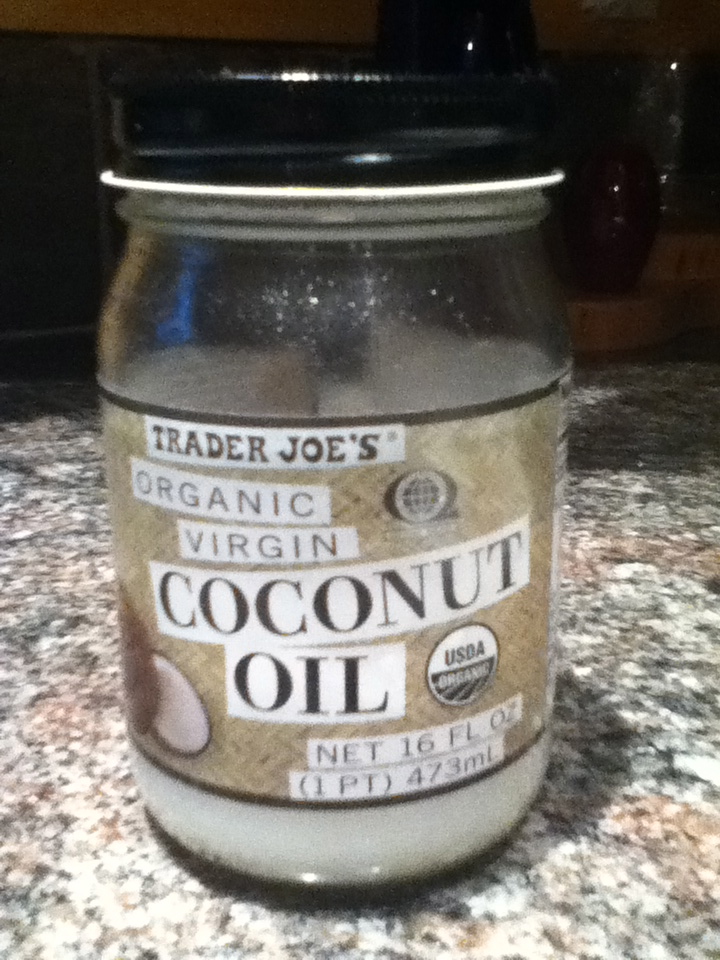
Coconut oil before hydrogenation. Source: Wikimedia Commons (CC BY-SA 3.0)
Limitations
Pure coconut wax is soft and can deform in warm storage conditions. It is not suitable for freestanding candles. Because coconut oil is a food crop with competing uses, coconut wax tends to be more expensive than soy wax per kilogram and is more subject to supply price variation.
Comparison reference table
| Property | Soy Wax | Beeswax | Coconut Wax |
|---|---|---|---|
| Melt point (approx.) | 46–54°C | 62–65°C | 45–52°C |
| Fragrance load | 6–10% | 3–6% | 8–12% |
| Natural scent | Neutral | Honey / propolis | Faint coconut |
| Suitable for pillars | No | Yes | No |
| Surface finish | May frost | Smooth, matte | Smooth, glossy |
| Relative cost | Low | High | Medium–high |
Working with wax blends
Many small producers use blends rather than single waxes. Common combinations include:
- Soy + coconut (70/30): Reduces frosting, improves hot throw, smooth surface finish. Suitable for container candles.
- Beeswax + coconut (80/20): Softens the hardness of pure beeswax slightly, improves adhesion to container walls, retains natural beeswax scent.
- Soy + beeswax (85/15): Adds hardness to container soy wax. Reduces frosting. Fragrance capacity is slightly reduced.
Blend ratios should always be tested in small batches (250–500g) before scaling, as the behaviour of blended wax can vary with different fragrance oils and wick types.
Melt point ranges given here are approximate and based on general formulation types. Specific products from different suppliers may vary. Always check the technical data sheet for the specific wax product being used.
Updated: June 2026 · References: Wikipedia — Beeswax · Wikipedia — Soy candle